
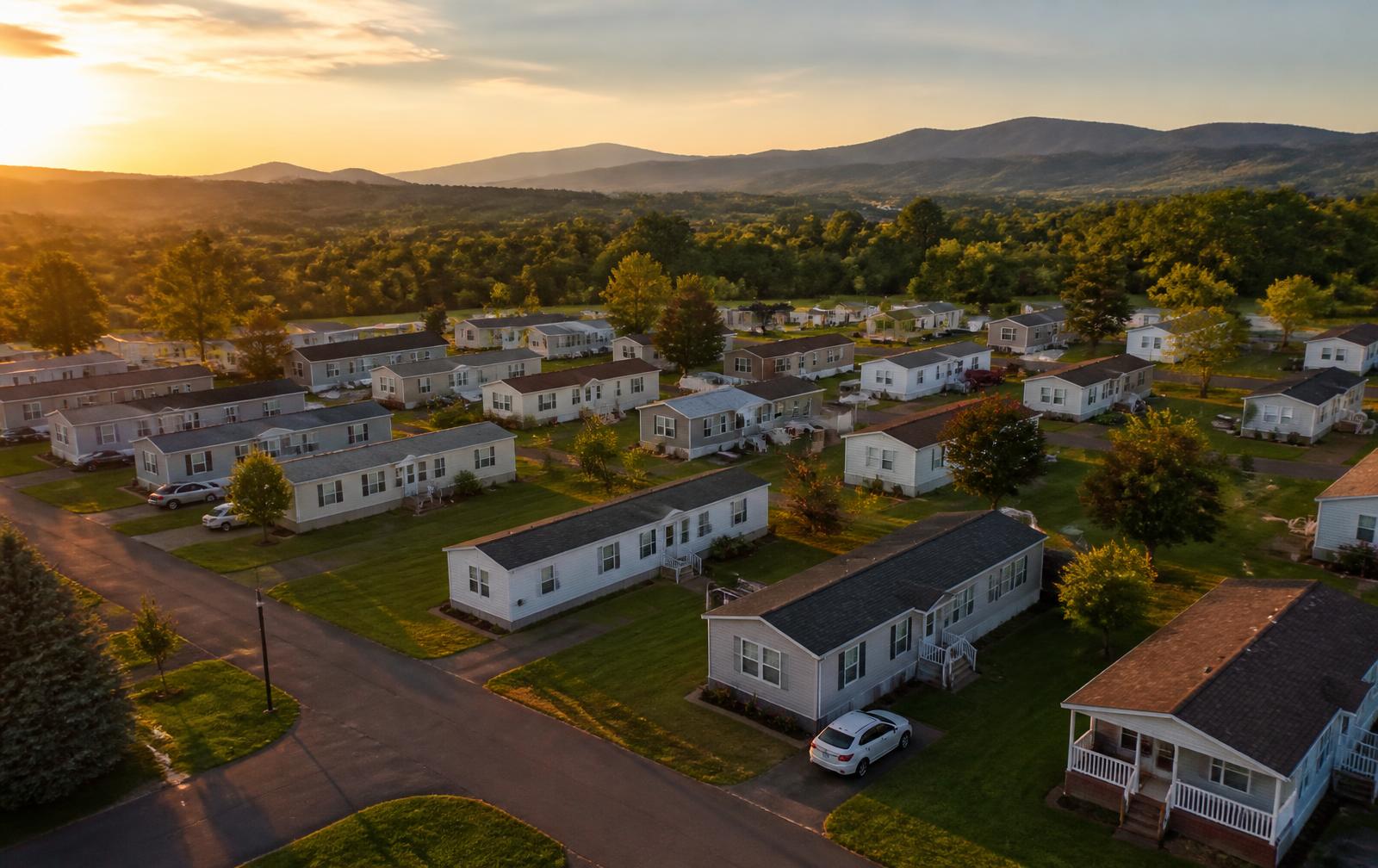
Direct buyer, Virginia only
Considering selling a mobile home park in Virginia?
Titan Property Investors buys entire manufactured housing communities in the Commonwealth: city utilities or a drainfield, full or half empty, tenant-owned homes or park-owned. Start with one confidential conversation and a written read on your numbers, with the assumptions shown. Nothing gets listed and nothing gets circulated to a buyer list.
No listing agreement, no broker commission from you, no repairs asked of you. Offer and closing timing depend on the property, the records you can share, title condition, diligence findings and your own circumstances. We tell you what we think is realistic for your community, and we put that estimate in writing.
Our buying criteria, in plain terms
- What we buy
- Entire mobile home parks and manufactured housing communities, single properties or Virginia portfolios.
- Lot count
- No arbitrary limits. We have underwritten communities under 10 pads and over 300.
- Utilities
- Public water and sewer, master metered systems, private community water, wells, septic drainfields, package plants and lagoons.
- Homes
- All tenant-owned, all park-owned, or any mix, in any condition.
- Condition
- Stabilized, partly vacant, or carrying deferred road, drainage and water line work.
- Where
- Virginia only, statewide, including its independent cities.
What this site is not about
- Individual manufactured or mobile homes
- Communities outside Virginia
- Assignable contracts we shop to other investors
virginiamobilehomeparkbuyer.com is created, owned and operated by Titan Property Investors. You deal with the principals who sign the contract.
Who you are dealing withThree Virginia realities that decide your number
The Manufactured Home Lot Rental Act shapes your rent roll
Virginia's lot rental statute governs lot lease terms, required notices and terminations for communities of a certain size. Any serious buyer will read your lease form and your notice history. Month-to-month arrangements with no written lease are common in family-held communities and we underwrite them as they are.
Read the Virginia rules pageVDH and DEQ oversight is priced, not feared
Community water systems and wells fall under Virginia Department of Health permitting. Lagoons and package plants that discharge carry DEQ permits and sampling obligations. Drainfield age and reserve area decide whether vacant pads can ever be filled. Disclose an open notice early and it becomes a line in the offer instead of a renegotiation later.
Independent cities complicate the paperwork
Virginia has independent cities that sit outside any county. Zoning standing, rental inspection programs, stormwater fees and utility billing all change at that boundary, and many older communities are legal nonconforming uses whose standing can lapse if pads sit empty long enough.
Virginia sale requirements
Since 2026, a Virginia park sale carries its own notice process
Va. Code § 55.1-1308.3 gives residents, through a resident entity, and then the locality a right of first refusal once a park owner enters a contract to sell to a third party. It sets a five business day notice window, a posting by the Department of Housing and Community Development, fifteen day windows to give notice of intent, and later periods to reach an agreement and close. Section 55.1-1308.5 adds an affidavit of compliance recorded in circuit court. Most owners we speak with have not read it yet, and it changes how a sale is sequenced.
We wrote a plain-language walkthrough with links to the statute itself, because you should be able to check us. Retain your own Virginia attorney before signing anything: we are a buyer, not your counsel.
Read the Virginia sale requirementsDirect sale, broker listing, or hold and refinance
A direct sale is not the right answer for every Virginia community. Here is an honest comparison so you can decide which conversation is worth having. If we think a broker would net you more, we say so and explain why.
| Consideration | Selling direct to us | Listing with a broker | Holding and refinancing |
|---|---|---|---|
| Who pays the commission | No brokerage commission is charged to you by us. | Typically a percentage of the sale price, negotiated in the listing agreement. | None, though refinancing carries lender, legal and appraisal costs. |
| Exposure to the market | None. One buyer, one conversation, nothing circulated. | Broad. Competitive bidding can raise price, and residents often learn a sale is underway. | None. |
| Likely effect on price | A single underwritten number based on income, condition and utility risk. | Competition can produce a higher gross price, particularly for a stabilized community on public utilities. | You keep future upside, and you keep the operating and capital risk with it. |
| Repairs and condition work | None asked of you. Open utility and road items are priced into our read. | Buyers commonly request repairs, credits or price reductions after diligence. | Deferred capital stays yours to fund. |
| Certainty and re-trading | One counterparty buying in its own entity. We do not assign contracts. | Depends on the buyer pool, financing contingencies and how diligence goes. | Depends on lender appetite for manufactured housing in your submarket. |
| Effect on residents | We buy to keep operating the community. | Depends entirely on who wins the bid, including redevelopers. | No change. |
| Virginia § 55.1-1308.3 notice process | Applies to a third-party sale contract and is built into the schedule. | Applies as well. A listing does not remove it. | Not triggered while you continue to own and operate. |
Situations owners bring us
Retiring after decades of running it yourself
You have taken the after-hours calls, done the mowing and chased the rent. You want out cleanly, without residents finding out from a sign at the entrance.
An estate, trust or partnership that needs a documented exit
Multiple heirs, an unrecorded interest, or a partner who wants liquidity. These take longer on the title side and we plan for that instead of pretending otherwise.
A utility or health department item you would rather not fund
A drainfield repair permit, a DEQ sampling notice on a lagoon, or a community water system needing work. We buy communities in that condition and price the cure into the offer.
Vacancy you do not have the capital to fill
Empty pads take pad prep, homes, connections and time. We take that work on rather than asking you to complete it before closing.
Debt or tax timing driving the decision
A maturing note, a balloon, a 1031 window or a reassessment landing. Tell us the constraint early and we structure around it, including seller financing where that helps your tax picture.
The stages, not a countdown
Stage 1: First conversation
Pad count, occupied pads, current lot rent, who pays water and sewer, how many homes you own, and anything you already know is wrong with the property. No rent roll, survey or broker package needed to have this call.
Stage 2: Our written read
We underwrite in house against Virginia lot rent evidence and our own operating costs, then send a written offer or valuation range that shows the income, expense and capital assumptions behind it. How long that takes depends on how much you can share and how complex the utility picture is.
Stage 3: Contract and escrow
A short purchase agreement with a Virginia title company or real estate attorney you are comfortable with. We buy in our own entity and do not assign your contract.
Stage 4: Diligence
Utility verification, permits and zoning file review, one property walk, and rent roll confirmation. Visits are scheduled with you and kept low key. We do not reprice over things you disclosed up front.
Stage 5: Closing
Cash or seller-carried, structured to fit your tax situation. Timing follows title work, survey needs, any lender payoff and diligence findings, and we tell you what is realistic for your community rather than quoting a fixed number of days.
Virginia region by region
Utilities, flood exposure, zoning standing and expansion potential differ sharply across the Commonwealth. Start with the region your community sits in.
Public water and sewer is the norm, proffers and zoning conditions matter more than utilities, and the real question is whether the locality would ever permit the pads again if they were lost.
We look hard at sewer connection availability for vacant pads and at whether the community sits inside a county service district or on its own package plant.
Flood mapping, stormwater fees, master metering by a city utility and the condition of aging clay or cast iron laterals drive our numbers more than lot count does.
Karst geology, spring or well sources under Virginia Department of Health oversight, and reassessment cycles that outpace lot rent are what we study first.
Drainfield age, Virginia Department of Health repair permits, DEQ discharge items on lagoons, and how much of the rent roll sits in park-owned homes rather than land.
Grade and drainage, line breaks on long private mains, and whether expansion land is buildable once slope and setback rules are applied.
Questions Virginia owners ask first
- Will you tell me what you would pay before I commit to anything?
- Yes. Sending the form or calling is a request for a conversation, not a listing agreement and not an obligation to sell. After we understand the community we put a written offer or valuation range in front of you with the income, expense and capital assumptions shown, so you can argue with the numbers rather than take our word for it.
- How long does a Virginia park sale take?
- It depends on the property, the records you can share, title condition, diligence findings and, for a third-party sale contract, the notice periods in Va. Code § 55.1-1308.3. We do not advertise a fixed number of days, because any honest answer for a 40 pad community on a lagoon in Halifax County differs from one for a stabilized property on city sewer in Norfolk. We tell you what we think is realistic for yours.
- Do my residents have to find out?
- Nothing about your inquiry is public. There is no sign, no listing and no marketing package. Note that the 2026 right of first refusal statute does require notice to tenants and the locality once a third-party sale contract is signed, which is one reason we walk owners through that process early rather than at closing.
- Will you buy a community with a failing drainfield, a lagoon notice or empty pads?
- Yes. Private utilities and deferred capital are priced, not disqualifying. What hurts you is disclosing an open item late, because then it looks like a reason to reprice rather than a number we already accounted for.
- Do you buy individual mobile homes?
- No. We buy entire parks and manufactured housing communities in Virginia only. If you are selling a single home on a rented lot, we are not the right call, and we would rather tell you that in the first minute.
Start with a confidential conversation about your Virginia park
Sending the form is a request for a conversation. It is not a listing agreement, and it does not obligate you to sell. We ask about utilities, roads, homes and your reasons, then tell you whether a direct sale is worth exploring or whether another path fits your situation better.